
Download the State of Healthcare Machine Learning 2026–2027 Outlook
Independent intelligence on healthcare ML adoption, operational readiness, governance, clinical AI deployment, and the next wave of investment priorities across the U.S. and European Union
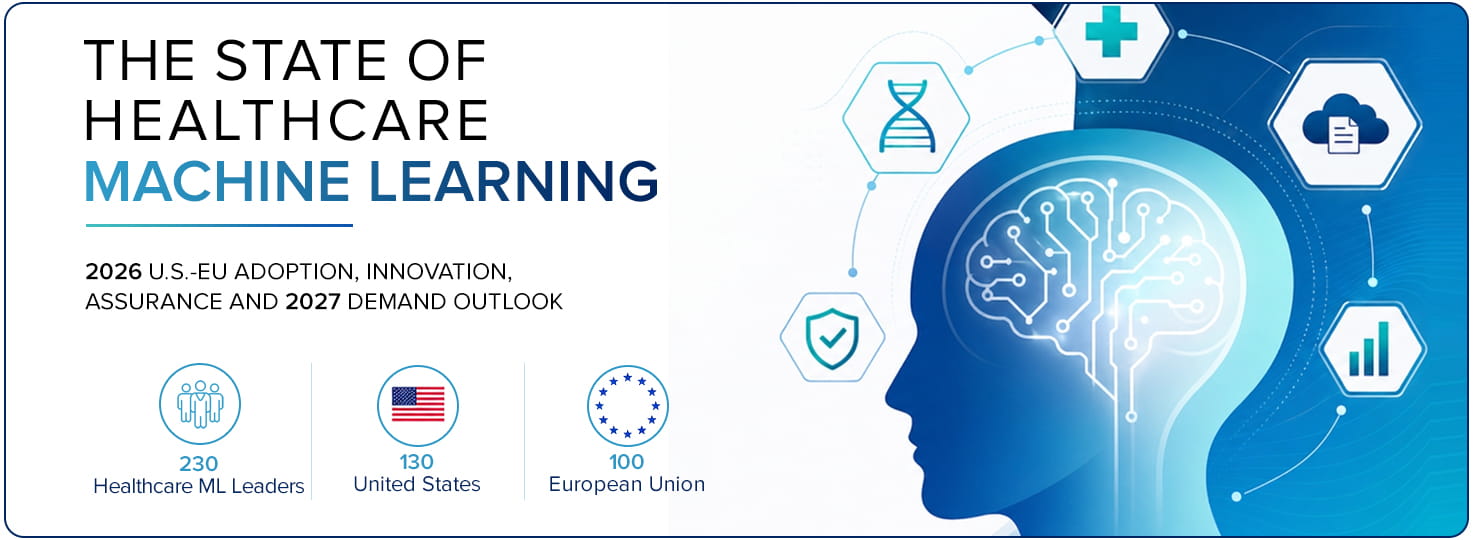
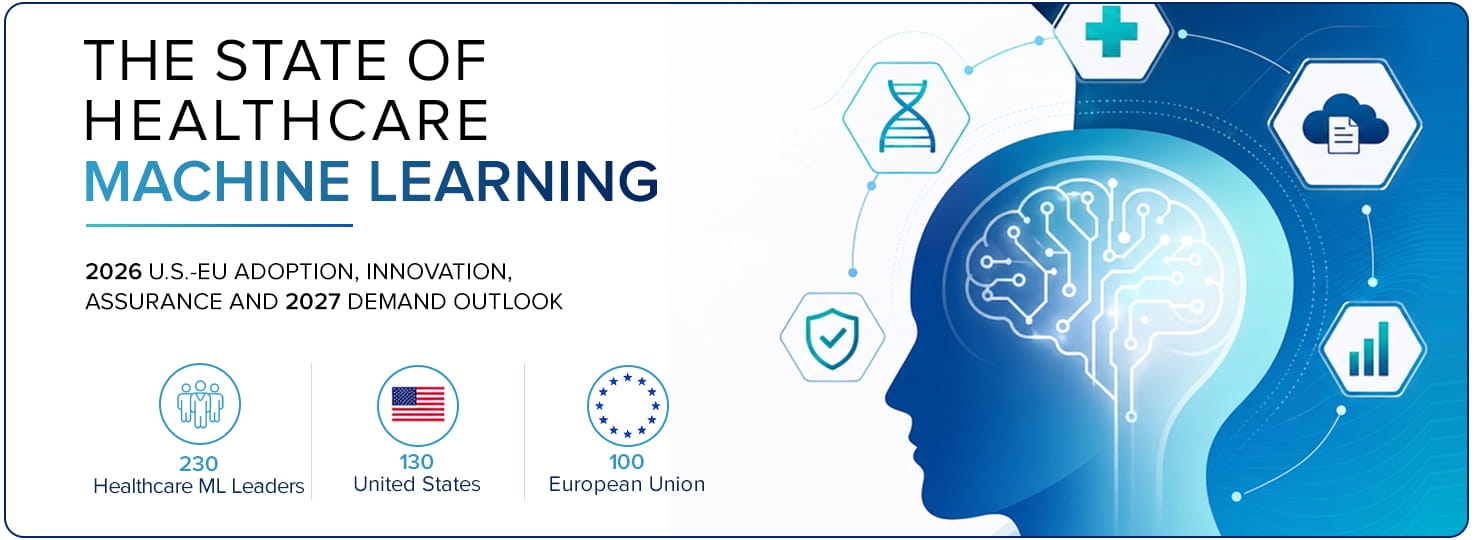
Black Book Research’s State of Healthcare Machine Learning 2026–2027 Outlook: U.S.-EU Adoption, Innovation and Assurance provides healthcare executives, AI leaders, CIOs, CMIOs, data science teams, clinical informatics leaders, policymakers, investors, consultants, and technology suppliers with an independent assessment of how healthcare organizations are moving machine learning from experimentation into accountable enterprise operations.
Based on a 230-participant healthcare machine learning leadership panel across the United States and European Union, the report examines adoption maturity, evidence readiness, deployment barriers, clinical validation practices, model governance, LLM containment, imaging AI, monitoring requirements, and the investment priorities expected to define healthcare ML strategies through 2027.
Why download the report
Healthcare machine learning has entered a new phase. Organizations are no longer asking whether AI models exist — they are confronting whether they can safely validate, integrate, monitor, govern, and demonstrate measurable value from models operating in real clinical and operational environments.
The 2027 market shift is moving beyond model availability toward assurance infrastructure, workflow integration, data readiness, continuous monitoring, workforce capability, and measurable outcomes.
Key findings include:
Healthcare ML adoption is accelerating, but governance maturity is lagging.
78% of surveyed organizations report at least one AI or ML system in sustained production, yet only 19% meet the complete control requirements for ownership, validation, monitoring, version governance, incident response, rollback, and retirement.
Production adoption varies significantly by healthcare sector.
Sustained ML production reaches:
-
95% of imaging and diagnostic organizations
-
90% of payer organizations
-
86% of academic medical centers and integrated delivery networks
-
63% of community hospitals
-
45% of behavioral health, post-acute, and long-term care organizations

Integration is the leading barrier to scaling AI.
63% of healthcare ML leaders identify EHR, PACS, RIS, LIS, and workflow integration challenges as one of the top reasons promising pilots fail to reach enterprise deployment.
Clinical LLM adoption is expanding faster than governance controls.
83% of organizations are evaluating or using healthcare LLM applications, 57% report production use, and 61% report observed or suspected shadow use of unapproved public LLM tools.
2027 investment priorities are shifting toward operational assurance.
75% expect healthcare AI/ML budgets to increase in 2027, with organizations prioritizing:
-
AI/ML monitoring and surveillance
-
Workflow integration
-
LLM governance
-
Data provenance
-
Outcome measurement and value realization
Who should download it
Healthcare executives, CIOs, CDIOs, CMIOs, CNIOs, AI and analytics leaders, data science executives, clinical informatics teams, innovation officers, cybersecurity and governance leaders, investors, consultants, policymakers, and healthcare technology suppliers seeking insight into the next phase of enterprise machine learning adoption.
What’s inside
-
73 pages of healthcare machine learning market intelligence
-
U.S. and European Union adoption comparisons
-
Healthcare sector ML maturity analysis
-
Evidence readiness and clinical validation assessment
-
AI/ML governance and operational integrity benchmarks
-
Clinical LLM adoption and shadow AI analysis
-
Imaging AI and multimodal AI market assessment
-
2027 healthcare ML investment outlook
-
Clinical ML Operational Integrity Index
-
Executive recommendations for healthcare leaders
-
Healthcare ML development, consulting, and support vendor directory